
If you recently received an unexpected email or SMS from CVL KRA urging you to validate your contact details, you are likely wondering if the message is actually legitimate. Unlike standard marketing verification emails that simply check if your inbox is active, this specific request is a critical administrative requirement within regulated financial markets.
This validation serves as a foundational component of the broader Know Your Customer (KYC) and investor-records management process. Because centralized KYC status affects how regulated intermediaries can service your account, ignoring these prompts can create compliance friction. Depending on your KYC status and the product involved, unresolved validation issues may limit what you can do until the record is updated.
To help you navigate this requirement safely, this guide breaks down exactly what CVL KRA is and why they are actively reaching out to confirm your information. We will explore how this regulatory validation process works, clarify whether compliance is strictly mandatory, and explain exactly what to do if your recorded details appear incorrect.
TL;DR: If you recently received an email or SMS from CVL KRA, do not ignore it—this is a mandatory regulatory checkpoint enforced by SEBI, not a commercial marketing message. CVL KRA (CDSL Ventures Limited KYC Registration Agency) operates as the centralized identity database for Indian financial market investors. To prevent financial fraud and ensure critical transaction alerts reach the correct recipient, regulations require intermediaries to definitively validate your registered email and mobile number. Ignoring this validation prompt triggers severe compliance friction, immediately flagging your centralized KYC status as "On-Hold" or "Rejected," which will freeze your trading and demat accounts. To maintain uninterrupted market access, you must authenticate your contact details through the official CVL KRA portal. If the listed email is outdated, you cannot edit it via the email link; you must file a formal KYC modification request through your stockbroker to push the corrected data back to the centralized agency.
What is CVL KRA?
CVL KRA operates as a centralized KYC Registration Agency designed to securely maintain investor records across the financial market ecosystem. Its primary mandate is to eliminate redundant paperwork by hosting a highly secure, unified database of verified investor profiles.
Before centralized systems existed, investors were forced to repeatedly submit identical identity documents every time they opened a new account with a different broker. CVL KRA removes this administrative friction by allowing registered financial intermediaries to seamlessly access and rely upon a single, shared KYC record. This shared architecture drastically accelerates account onboarding while maintaining strict regulatory compliance across the industry.
What does CVL KRA email validation mean?
In the context of financial compliance, CVL KRA email validation is the formal process of verifying that the contact information attached to your centralized KYC profile is active and strictly belongs to you. It acts as a necessary digital checkpoint, ensuring that critical regulatory alerts regarding your investments actually reach your personal inbox rather than bouncing from an outdated address.
Unlike commercial email verification tools designed to help marketing teams avoid hard bounces, this specific regulatory step focuses entirely on account security and compliance. Financial intermediaries rely on confirmed contact data so regulatory and account-related communications can reliably reach the investor through the correct email address and mobile number. By validating these touchpoints, the KYC system helps financial institutions maintain accurate data for all critical outreach.
Why did you receive a CVL KRA email or SMS?
Investors may receive these notifications when contact details need to be validated as part of KYC registration, KYC modification, or remediation of a KYC status issue. In practice, the trigger usually comes through a registered intermediary or KYC workflow rather than as a generic marketing-style verification message. This standard procedure ensures your newly connected institution has the exact right contact data on file.
Even if you have not made a recent transaction, you may still receive a validation request when your KYC record needs to be confirmed, updated, or remediated. The purpose is to ensure that the contact details attached to your centralized KYC record remain usable and correctly linked to you.
Is the CVL KRA validation message real?
Given the sharp rise in financial phishing scams, questioning the legitimacy of an unexpected validation link is an incredibly smart first reaction. A genuine CVL KRA message will direct you straight to their official secure domain and will never ask you to provide sensitive trading passwords or banking PINs.
If the sender address looks suspicious or the URL contains strange characters, do not click any provided links. Instead, independently navigate to the official CVL KRA portal to check your KYC status directly. You can also immediately contact your registered broker to safely verify the pending request on your behalf.
How does CVL KRA email validation work?
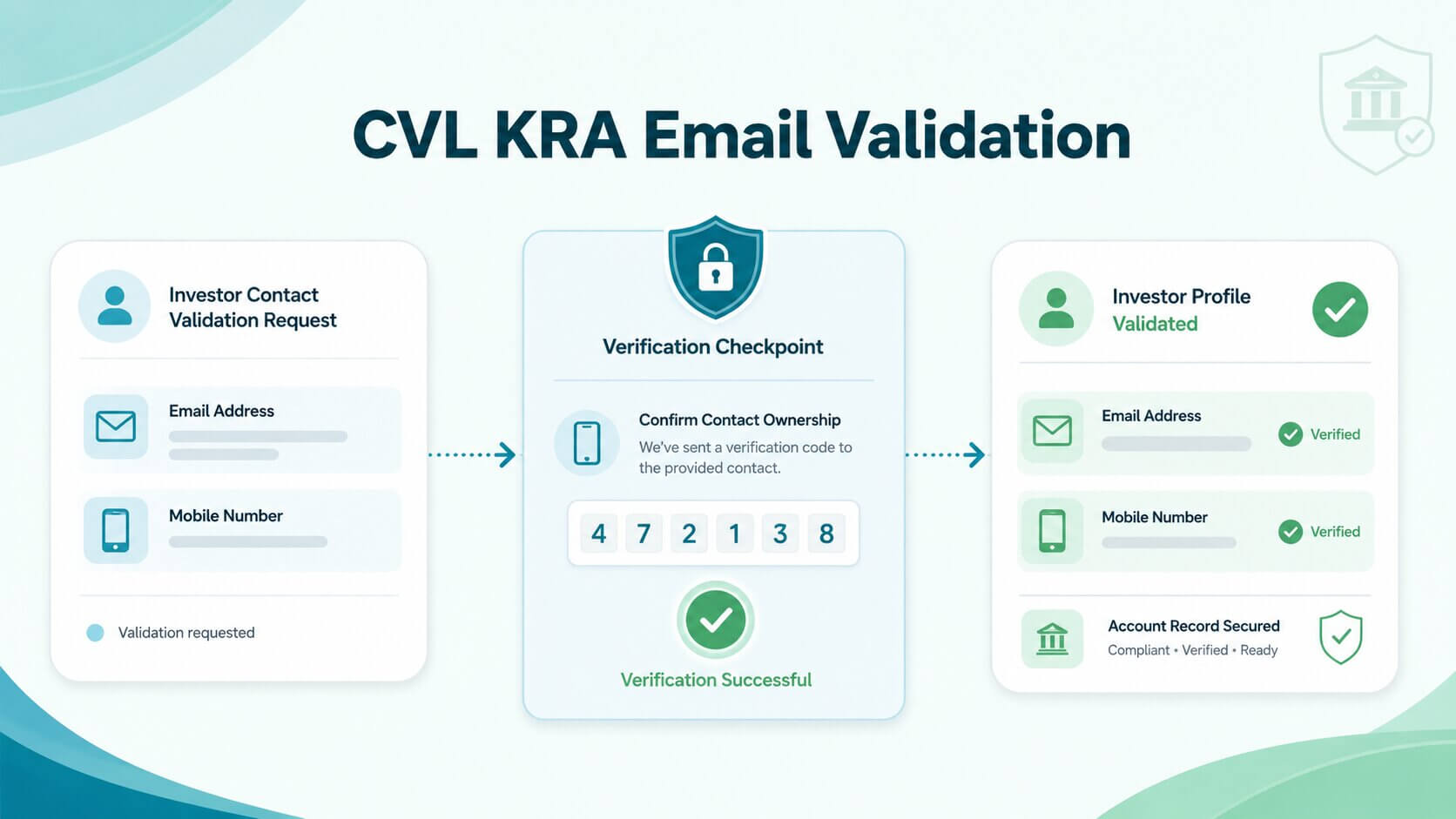
While the KYC system also involves broader identity attributes such as PAN, Aadhaar, name, and address validation, this specific contact-detail step is focused entirely on confirming that the recorded email address and mobile number are usable. Once a KYC registration or modification workflow is initiated, the validation process may ask you to confirm your details through the relevant official channel, which can include portal-based steps or OTP-style verification.
To complete the cycle, you typically need to follow the official validation step provided through the approved KYC workflow. Once authenticated, the centralized system immediately updates your investor profile status to "Validated," allowing your broker to proceed with your financial requests without regulatory friction.
What details are usually checked during validation?
This specific regulatory checkpoint focuses exclusively on confirming your primary digital communication channels. The system is designed to verify that the submitted email address and mobile number are actively functioning and strictly accessible only by the registered investor.
While the agency holds your broader identity documents, this particular email step does not re-evaluate those core credentials. The sole purpose of this check is to guarantee that mandatory compliance alerts, transaction receipts, and sensitive account updates will successfully reach the right person.
By explicitly validating these contact points, financial intermediaries drastically reduce the risk of critical financial communication falling into a black hole. This process ensures your sensitive data is never intercepted by bad actors targeting abandoned inboxes.
Is CVL KRA email validation mandatory?
In practice, email or mobile validation becomes mandatory the moment it affects your KYC status. Unresolved issues such as “mobile or email not validated” can quickly place your master record On-Hold or Rejected.
According to CVL KRA’s published guidance, these flagged reasons must be explicitly remediated before you can proceed with standard market activities. Completing this simple digital checkpoint is the only way to ensure frictionless access to your financial portfolio, protecting your ability to manage your money without hitting sudden administrative roadblocks.
What happens after CVL KRA email validation?
Once you successfully click the verification link or submit the required OTP, the CVL KRA system instantly updates your centralized profile. You will typically receive a final confirmation message stating that your contact details are now officially validated within the regulatory database.
Once the status is updated, the corrected KYC state can then be relied upon through the relevant intermediary workflows that use the centralized KRA record. Consequently, you can expect a frictionless trading experience and highly reliable delivery of all future transaction alerts without sudden compliance interruptions.
What if your KYC details are wrong or outdated?
If you realize the email address or mobile number listed in the validation prompt is incorrect, you cannot simply edit the text within the email itself. The centralized agency strictly mirrors the baseline data originally submitted by your financial institutions.
To permanently correct these errors, you need to submit a formal KYC modification request through a registered intermediary such as a broker, depository participant, or mutual fund. Once your intermediary processes the required supporting documents, they will automatically push the corrected contact details back to CVL KRA to initiate a fresh, accurate validation cycle.
Who needs CVL KRA email validation?
Investors whose KYC workflow requires contact-detail validation must complete this process to maintain or upgrade their centralized profile. Whether you are an active retail trader buying direct equities or a passive investor quietly building wealth through managed funds, maintaining a verified digital identity is a universal requirement for market access.
Beyond the individual investor, the entire ecosystem of registered financial institutions heavily relies on this confirmed data. Stockbrokers, depositories, and asset management companies fundamentally depend on the centralized KRA system to safely satisfy their strict regulatory compliance obligations.
By utilizing a single, verified contact record, these regulated entities avoid the massive operational burden of independently tracking down client details. This centralized validation creates a unified standard of truth that keeps the entire financial pipeline secure, compliant, and functionally efficient.
Why is CVL KRA email validation important?
At its core, this regulatory checkpoint acts as a critical line of defense against financial fraud and unauthorized account manipulation. By strictly verifying your digital contact points, the centralized system ensures that highly sensitive transaction alerts and authorization codes are delivered exclusively to the rightful account owner. This process effectively prevents bad actors from silently hijacking your portfolio notifications or routing important updates to a compromised address.
Beyond pure security, this validation fundamentally guarantees the reliability of your broader financial communication pipeline. If an investor's recorded email address is outdated or contains a subtle typo, they risk missing mandatory compliance notices, sudden margin calls, or critical investment statements. Active validation eliminates this deliverability risk, ensuring you remain fully informed about your active investments and any sudden regulatory shifts.
Finally, maintaining a validated profile creates significantly smoother administrative workflows across the entire market ecosystem. When brokers and financial institutions can confidently rely on the KRA’s verified database, they do not have to preemptively freeze your accounts due to bounced emails or unverified data. Ultimately, this seamless compliance structure protects your uninterrupted access to the market while minimizing frustrating bureaucratic delays.
What should you do if you have problems with CVL KRA email validation?
If you attempt to validate your profile and encounter technical friction, do not immediately assume your account is permanently restricted. Most validation errors stem from simple browser timeouts, expired secure links, or outdated intermediary records. To quickly isolate and resolve the issue, follow these immediate diagnostic steps:
- Check your status through the official CVL KRA KYC Inquiry page using your PAN and the required portal details to see whether the record is Validated, Registered, or On-Hold.
- Clear your browser cache or switch to an entirely different network connection if the initial validation link times out or refuses to load.
- Immediately abandon the validation attempt if the portal displays a misspelled or outdated email address, as you cannot manually edit this secure field.
If your diagnostic check reveals that the underlying contact data is completely wrong, you must pause the digital process. You will need to file a formal KYC modification request through your broker to overwrite the bad data before initiating a fresh validation cycle.
How do you contact CVL KRA or get support?
When standard troubleshooting fails or your account remains restricted despite a successful validation, reaching out to official support channels is your safest escalation route. You can contact CVL KRA through the official support details published on its website, including the listed phone number and grievance email. Always have your PAN and recent confirmation reference numbers readily available to drastically accelerate the investigation process.
Alternatively, if the problem stems from fundamentally incorrect data rather than a technical glitch, your registered financial intermediary should be your primary point of contact. Stockbrokers and mutual fund distributors possess the direct backend access required to submit formal KYC correction requests on your behalf. Leveraging their dedicated compliance teams is almost always the most efficient way to trigger a fresh, accurate validation cycle.
Conclusion
Ultimately, CVL KRA email validation is a fundamental KYC checkpoint designed to keep your centralized investor records accurate and your financial communication highly reliable. If you receive an unexpected message from the agency, your immediate priority is to verify its legitimacy, confirm that your recorded contact details are entirely accurate, and determine if your broader KYC profile requires a formal update. By successfully completing this simple digital verification step, you actively protect your investment portfolio from sudden administrative friction and dangerous communication black holes.
For organizations managing these high-trust financial workflows, maintaining flawless data hygiene goes far beyond basic investor compliance. When brokers and financial intermediaries need to guarantee that their critical alerts and automated onboarding sequences actually reach the intended inbox, they require uncompromising data accuracy. You can start a 14-day free trial of Allegrow today to test up to 1,000 contacts completely free, ensuring your internal communication pipelines remain perfectly optimized and entirely bounce-free.
FAQs about CVL KRA email validation
What is CVL KRA email validation?
CVL KRA email validation is a mandatory regulatory process designed to confirm that the contact details tied to your centralized KYC profile are active and strictly belong to you. It ensures that critical financial alerts, transaction summaries, and compliance notices from your brokers or mutual funds can reliably reach your personal inbox.
Why did CVL KRA send me an email or SMS?
You typically receive these messages because a financial intermediary triggered a mandatory audit of your existing KYC profile after you opened a new account or updated your details. The agency also conducts routine data sweeps to ensure long-standing investor records remain accurate and fully compliant with current market regulations.
Is CVL KRA validation mandatory?
Yes, confirming your contact details is a strict regulatory requirement for all individuals participating in regulated financial markets. Failing to maintain a verified KYC status forces your broker or investment provider to legally restrict your account, temporarily preventing you from executing new trades or processing withdrawals.
What happens if I do not validate my details?
If you ignore the verification requests, the centralized KRA system will eventually flag your KYC profile as incomplete and place it "On-Hold." Once your master profile is flagged, connected financial intermediaries must pause your account access, creating immediate operational friction until you successfully complete the digital verification process.
How do I change my CVL KRA KYC details?
You cannot manually edit incorrect contact details directly through the CVL KRA email link or the basic verification portal. Instead, you must submit a formal KYC modification request with supporting documents through your registered broker, depository, or investment platform to permanently overwrite the master record.
How do I know if the CVL KRA message is genuine?
A legitimate CVL KRA validation message will direct you straight to their official domain and will never ask for sensitive data like trading passwords or banking PINs. If you doubt the sender's authenticity, do not click the link; instead, independently verify your KYC status on the official portal or contact your registered broker for safe confirmation.

.jpg)
.jpg)
.jpg)