In the fast-paced world of B2B sales, RevOps, and marketing, reaching the inbox consistently is non-negotiable. If emails don’t reach the inbox, even the best targeting, messaging, and sequencing strategies break down. Because of this, many teams turn to email warm-up tools like Lemwarm as one of the first steps to protect sender reputation and improve deliverability.
Warm-up helps establish trust with mailbox providers by gradually increasing sending volume and generating engagement signals. However, as teams scale outbound, many discover that warm-up only solves a fraction of the deliverability problem. Domains can be fully warmed and still land in spam due to issues warm-up tools cannot prevent, such as invalid emails, spam traps, risky catch-all addresses, or silent authentication drift. As a result, inbox placement issues often persist even when warm-up is running correctly.
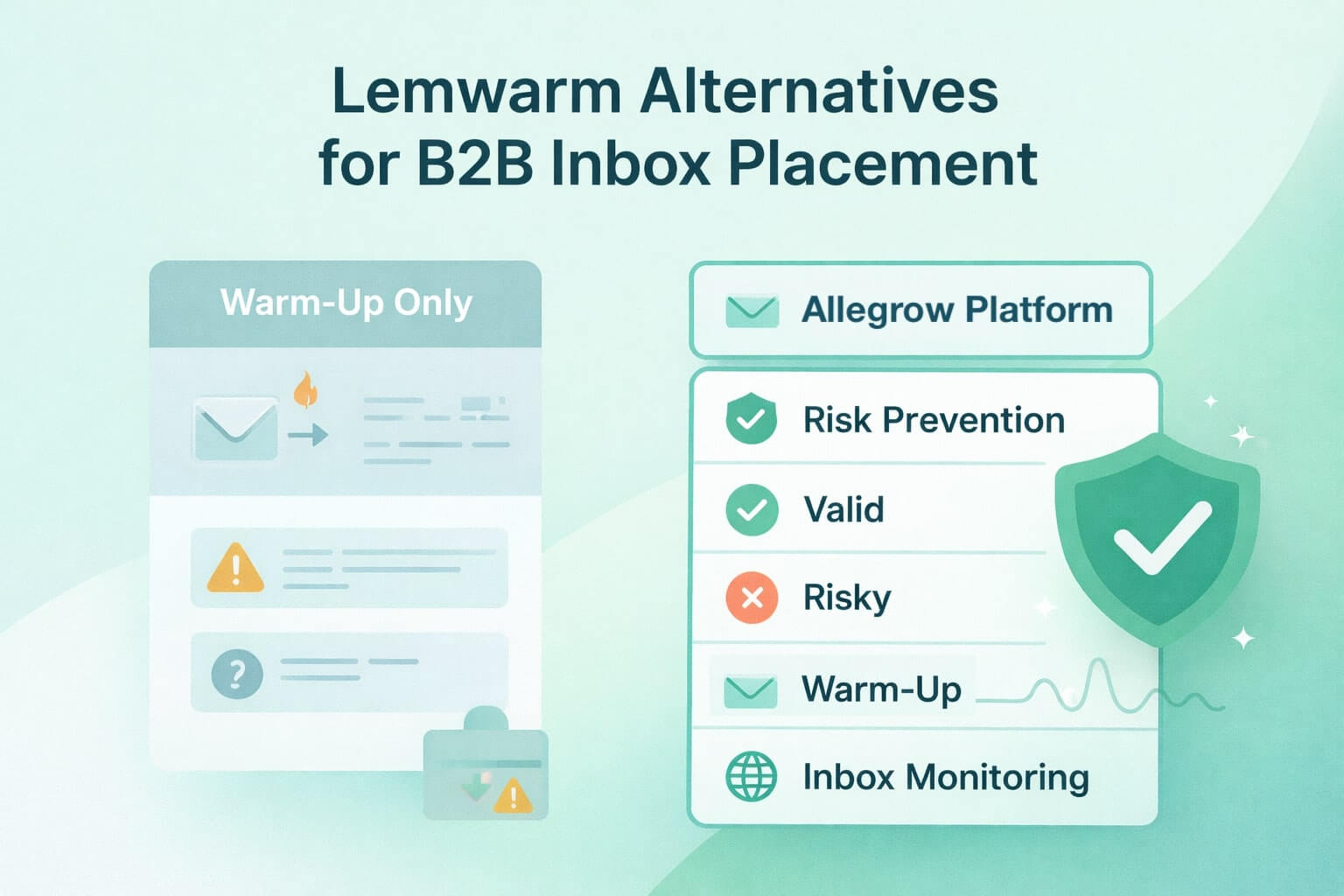
This gap is what drives teams to search for a Lemwarm alternative. Instead of another warm-up-only tool, they are looking for more complete deliverability platforms that address the full set of factors influencing inbox placement. That includes automated warm-up, list cleaning with actionable verification, and proactive monitoring of spam placement and sender reputation.
This article explores effective Lemwarm alternatives in 2026 that focus on actual inbox placement, not just warm-up volume. We will provide a short list of top contenders along with side-by-side comparisons, limitations, and decision guidance tailored to B2B outbound.
TL;DR: Lemwarm alternatives are comprehensive deliverability platforms sought by B2B teams who discover that automated warm-up alone cannot prevent spam foldering. While Lemwarm effectively builds volume history, it lacks the risk prevention layer required to identify spam traps, resolve catch-all domains, or detect manual complainers—meaning a fully warmed domain can still be blocked by a single bad list upload. Consequently, modern outbound strategies are shifting toward all-in-one platforms like Allegrow, which combine engagement-based warm-up with unlimited list verification and inbox placement monitoring, ensuring that sender reputation is both built and protected from bad data.
What do buyers really mean by “Lemwarm alternative”?
When buyers search for a Lemwarm alternative, they are usually looking for more than a simple warm-up tool. While Lemwarm is effective at increasing sending volume gradually, it does not address persistent inbox placement issues. Teams generally want platforms that can actively improve deliverability and give visibility and control over their outbound email campaigns.
Key pain points driving this search include:
- Spam placement persists despite warm-up
- Per-mailbox pricing can be costly for scaling teams
- Limited visibility and control over deliverability metrics
In short, they are seeking an email deliverability platform rather than a warm-up-only solution.
What features should a Lemwarm alternative have?
A serious Lemwarm alternative must go beyond volume warm-up to solve spam foldering issues. Here are six non-negotiable features for B2B teams that want to consistently hit the inbox folder:
- Actionable catch-all statuses: Tools should report actionable statuses such as “valid” or “invalid” per mailbox instead of vague statuses, like "unknown".
- Spam-trap and manual-reporter detection: Identifying spam traps or users who mark emails as spam prevents hidden reputation hits.
- Inbox placement monitoring and alerts: Platforms should track spam and tab placement trends, and notify you of risks before they escalate.
- Automated warm-up: While this is not enough on its own, automated warm-up helps establish sender credibility, making it an essential part of a broader strategy.
- SPF/DKIM/DMARC checks: Authentication drift is a real issue, so tools should monitor and alert when records are misconfigured.
- Unlimited verification model: Continuous hygiene is vital, so teams should not be constrained by per-credit verification limits and credit budget.
What is the best Lemwarm alternative in 2025?
Choosing the best Lemwarm alternative in 2025 requires looking beyond warm-up automation and focusing on platforms that directly influence inbox placement. For most B2B teams, the goal is not just increasing sending volume but ensuring that messages reliably land in the primary inbox while preventing hidden reputation threats such as spam traps, complainers, or risky catch-all contacts.
To determine the strongest alternative, we evaluated tools based on risk‑prevention depth, warm‑up sophistication, monitoring capabilities, integration needs, and pricing models. Here’s a detailed look at the top options:
Allegrow — best lemwarm alternative for B2B inbox placement
Allegrow stands out as the most complete choice for B2B organizations. It is specifically built for outbound teams and integrates verification, monitoring, and warm-up into a single workflow. Instead of returning vague “unknown” outcomes, Allegrow assigns a "valid" or "invalid" status to catch‑all contacts, giving teams decisive actions to take.
It also identifies spam traps and manual spam reporters, which are two of the most damaging threats to sender reputation that legacy verifiers cannot detect. Combined with its inbox placement monitoring and real B2B testing network, Allegrow provides ongoing visibility into how mailbox providers treat your domain in real conditions rather than in artificial engagement loops. This matters because sharp declines in inbox placement often start days before teams notice a hit to reply rates, and early detection prevents campaigns from collapsing.
Beyond verification and inbox monitoring, Allegrow also supports automated warm-up and continuous authentication checks as part of the same workflow. SPF, DKIM, and DMARC records can quietly drift after provider changes or DNS updates, and Allegrow’s hourly checks help catch these issues before they impact deliverability. Paired with this, Allegrow’s unlimited verification model encourages continuous list hygiene rather than one-off cleanups, which is a critical advantage for teams running daily outbound sequences.
Pros:
- Built specifically for B2B outbound
- Actionable valid/invalid catch-all statuses
- Detects spam traps and manual spam reporters
- Unlimited verification with no credit anxiety
- Inbox placement monitoring and automated warm-up
Cons:
- Focused on B2B use cases rather than one-off list cleaning
- Subscription-based rather than pay-per-use
Best use case: B2B sales and RevOps teams running daily outbound who need consistent inbox placement and proactive risk prevention.
NeverBounce — best for batch list scrubs and API hygiene
Click here to read a full in-depth review of NeverBounce.
NeverBounce remains a strong choice for batch list scrubs and API-driven hygiene. Marketing teams running periodic newsletters or large CSV imports often rely on NeverBounce because it efficiently processes big lists and integrates easily with most ESPs and CRMs. It does its job well within that context.
However, it is not designed to uncover deeper risk signals behind catch-all domains and cannot detect spam traps, complainers, or nuanced B2B threat patterns. Furthermore, NeverBounce does not offer email warm-up. Teams using it typically rely on a separate warm-up tool, such as Lemwarm or another engagement-based solution, while using NeverBounce strictly for list cleaning. While this can work for basic hygiene, it also creates blind spots.
Its credit-based pricing also limits its usefulness for outbound teams that need frequent re-verification. Because B2B lists decay quickly, contacts that were valid weeks ago can become risky without warning, and per-credit costs often discourage the continuous hygiene needed to prevent reputation damage.
Pros:
- Strong batch and real-time verification
- Easy ESP and CRM integrations
- Reliable for large, static lists
Cons:
- No spam trap or complainer detection
- Catch-all outcomes lack actionable clarity
- Credit-based pricing discourages frequent checks
Best use case: Marketing teams performing periodic list scrubs or validating large uploads before campaigns.
InboxAlly — best engagement-based warm-up add-on
Click here to read a full in-depth review of InboxAlly.
InboxAlly offers value as an engagement‑based warm-up add-on. Instead of focusing on verification or reputaiton protection, it simulates positive engagement to teach inbox providers that your domain is trusted. This can help brands improve message positioning, especially when paired with optimized content.
That said, InboxAlly cannot identify risky contacts and should not be used as the primary safeguard for B2B outbound campaigns. It is most effective when combined with a platform like Neverbounce that handles risk prevention, while InboxAlly strengthens engagement signals.
Pros
- Engagement-based warm-up and sender training
- Helpful for improving content and placement signals
- Complements verification-focused platforms
Cons:
- No list verification or risk detection
- Cannot prevent spam traps or complainers
- Not sufficient as a standalone solution
Best use case: Teams that already verify and protect their lists and want an additional engagement signal layer.
Lemwarm best alternatives compared side by side
What are the limitations of each Lemwarm alternative?
Allegrow is built for B2B outbound, which means it goes beyond simple warm-up or basic verification. Its pricing reflects this depth, so teams looking for a low-cost or minimal solution may find it more expensive than lightweight tools. For B2C or permission-based lists, this level of verification may be more than necessary. However, for cold outbound teams, this depth of protection is essential for maintaining inbox placement.
As for NeverBounce, it works well for batch list scrubs, yet it isn’t designed for ongoing risk prevention or B2B complexity, and it does not offer warm-up. Its credit-based pricing can also become expensive for teams that need continuous or frequent re-verification.
Last but not least, InboxAlly strengthens engagement signals but cannot verify contacts or remove risky addresses like spam traps or complainers. It’s best used as a supportive warm-up add-on rather than a standalone deliverability safeguard.
Warm-up vs risk prevention: why they’re not the same thing
Warm-up and risk prevention play fundamentally different roles in email deliverability. Warm-up focuses on gradually increasing sending volume and generating positive engagement signals so mailbox providers start viewing your domain as trustworthy. This is valuable for new domains or mailboxes and can help stabilize reputation over time. However, warm-up only influences how you send, not who you send to, and that distinction is critical.
Risk prevention targets the root causes of spam placement. It focuses on removing the hidden threats from contact lists, such as spam traps, historical reporters, inactive mailboxes, or risky catch-alls that look deliverable but fail silently. Even perfectly warmed-up domains can be pushed into spam within days if they continue emailing risky contacts. For B2B outbound teams, whose lists often come from scraped sources, trade shows, intent feeds, or enrichment platforms, this risk exposure is far higher than in traditional opt-in marketing.
In short, warm-up improves reputation signals, while risk prevention protects reputation from silent damage. They complement each other, but they are not interchangeable, and warm-up alone cannot safeguard inbox placement in a B2B environment.
How to choose the right Lemwarm alternative (decision path)
Choosing the right Lemwarm alternative is easier when guided by a simple decision framework. Follow these three steps to find the best alternative for you:
- Motion: Teams running daily outbound sequences across multiple mailboxes need a tool that does more than warm-up; they need advanced verification, monitoring, as well as warm-up. Marketing teams sending occasional newsletters or quarterly campaigns can rely more on simpler verifiers with a warm-up add-on.
- Risk tolerance: If you’re running B2B outbound with high-value leads and cold lists, advanced protection is essential, since these campaigns carry higher risk and emails are more likely to be filtered if your reputation drops. Permission-based lists carry less risk because subscribers expect your contact and addresses to be verified, allowing higher risk tolerance and less need for deep verification. The same is true for most B2C lists, where spam traps and catch-alls are rare and simpler verification is usually sufficient.
- Operating model: If you add new leads every day, test new segments weekly, or frequently rerun checks, unlimited verification platforms fit best because they support ongoing hygiene without punishing you for volume. Credit-based models work only when your usage is infrequent and predictable.
Considering these factors, teams running regular B2B outbound with mixed or cold lists will likely benefit from a platform that combines verification, monitoring, and warm-up. Marketing teams with periodic campaigns may find batch verification tools sufficient, while engagement-focused warm-up solutions can complement existing workflows without replacing core risk prevention.
Summary & next steps
A true Lemwarm alternative does more than warm up emails - it protects your outbound from hidden risks that silently harm inbox placement. Allegrow identifies spam traps, complainers, and risky catch-alls, monitors inbox placement, and gives clear statuses, so you know exactly which contacts are safe to email.
Warm-up alone cannot prevent these threats, which is why risk prevention is critical for maintaining domain reputation and maximizing deliverability. Combining verification, monitoring, and automated warm-up ensures your outbound campaigns reach real inboxes consistently.
The best way to validate this is with a 14-day free trial. Upload up to 1,000 contacts, surface hidden risks, and see the impact on bounces, spam placement, and reply rates. With Allegrow, you’ll quickly discover which contacts are safe to email and which pose a hidden threat, giving your team the confidence to scale outbound campaigns effectively.
FAQs
What is the best Lemwarm alternative for B2B outbound?
Allegrow is widely regarded as the leading Lemwarm alternative for B2B outbound because it combines multiple capabilities into a single platform. Unlike traditional warm-up tools, Allegrow verifies risky catch-alls, detects hidden spam traps and dead mailboxes, monitors inbox placement in real time, and integrates automated warm-up, making it a comprehensive solution for any outbound motion.
How much is Lemwarm, and is it free with Lemlist?
Lemwarm is included with Lemlist subscriptions. Pricing depends on the number of mailboxes you want to warm up, with costs increasing as you add more mailboxes. It is designed to gradually increase sending volume and engagement signals for each mailbox.